
SnappCar is an online car-sharing platform in the Netherlands. With a similar concept to Airbnb, their platform allows people that own a car to put it online and rent it out to others. Car owners on the platform are free to decide what they want to charge for their car, but often we got questions like: what is a good price for my car? Can I charge more on weekends? What can I do to get more bookings? With so many variables involved, the task of setting your price can quickly become complicated — often resulting in poorly chosen prices and not enough bookings for car owners.
Problem statement
Setting a daily price involves many variables (car type, location, competition, seasonality) — an overwhelming task that often results in poorly chosen prices and fewer bookings.
My role
UI/UX Design, User research, Prototyping & User testing
Goal
Allow car owners to easily select the optimal daily price for their cars, resulting in more bookings.
Solution
Create a price suggestion system that uses AI to predict the optimal daily price for a car — eliminating the guesswork previously necessary, and automatically accounting for seasonality.
Research
The first step was to dive into the problem and understand better what the needs and struggles of users were. I interviewed a couple of car owners, and they described the task of setting their price as time-consuming and difficult — and said they rarely change their price because of that.
When gauging interest for a feature such as Dynamic Pricing, most users were very positive about it and said they would be willing to try it out. They were excited about the possibility of getting more bookings on days of low demand and earning a bit more on days of high demand (such as weekends). A small percentage of users said they were not interested in this feature, and that they prefer to keep a fixed price for transparency.
Users had some questions about how the algorithm would calculate the prices and how high the price differences would be, and mentioned that they would prefer to still have some kind of control inside Dynamic Pricing — not let their price be fully controlled by the algorithm.
Based on these research insights, I wrote down the following conclusions:
- The interface should clearly display the prices applied to each day, so it increases trust in the system
- To cater to the two different car owner profiles, we should keep the current way of setting a price (Fixed Pricing) and introduce Dynamic Pricing as an alternative for those that want it
- We should have a control that allows users to feel like they're still in charge of their price, such as a minimum-price control or the ability to override prices
Exploration
After gathering the insights from users, I did some research around AI-driven interfaces and a competitor analysis to see how other platforms solved similar issues. I combined all this research and started sketching some ideas for a solution.
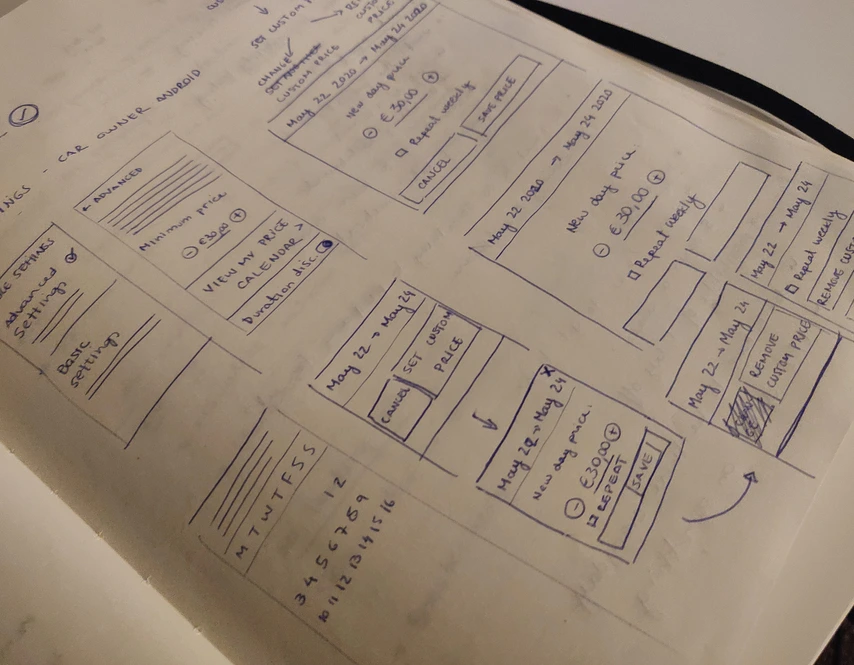
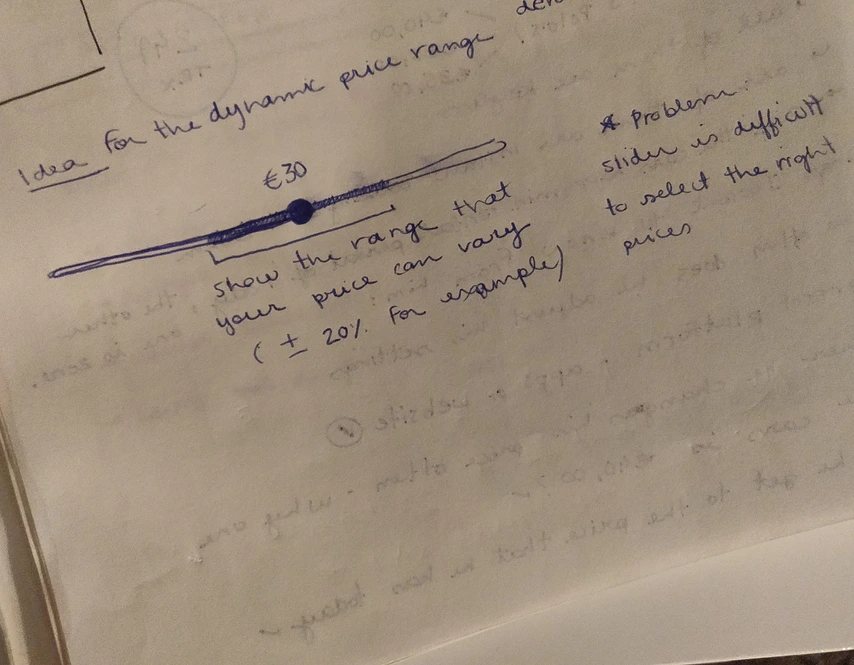
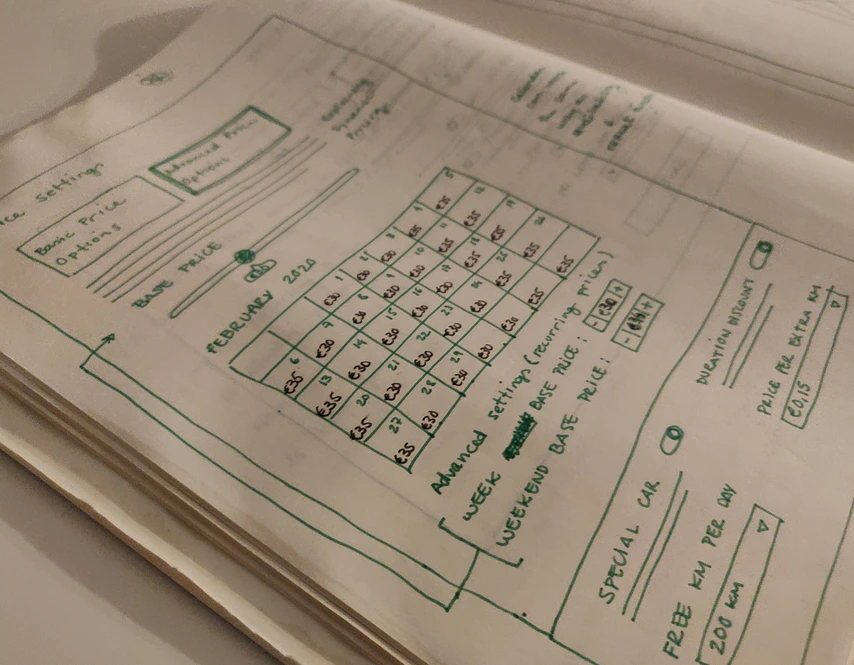
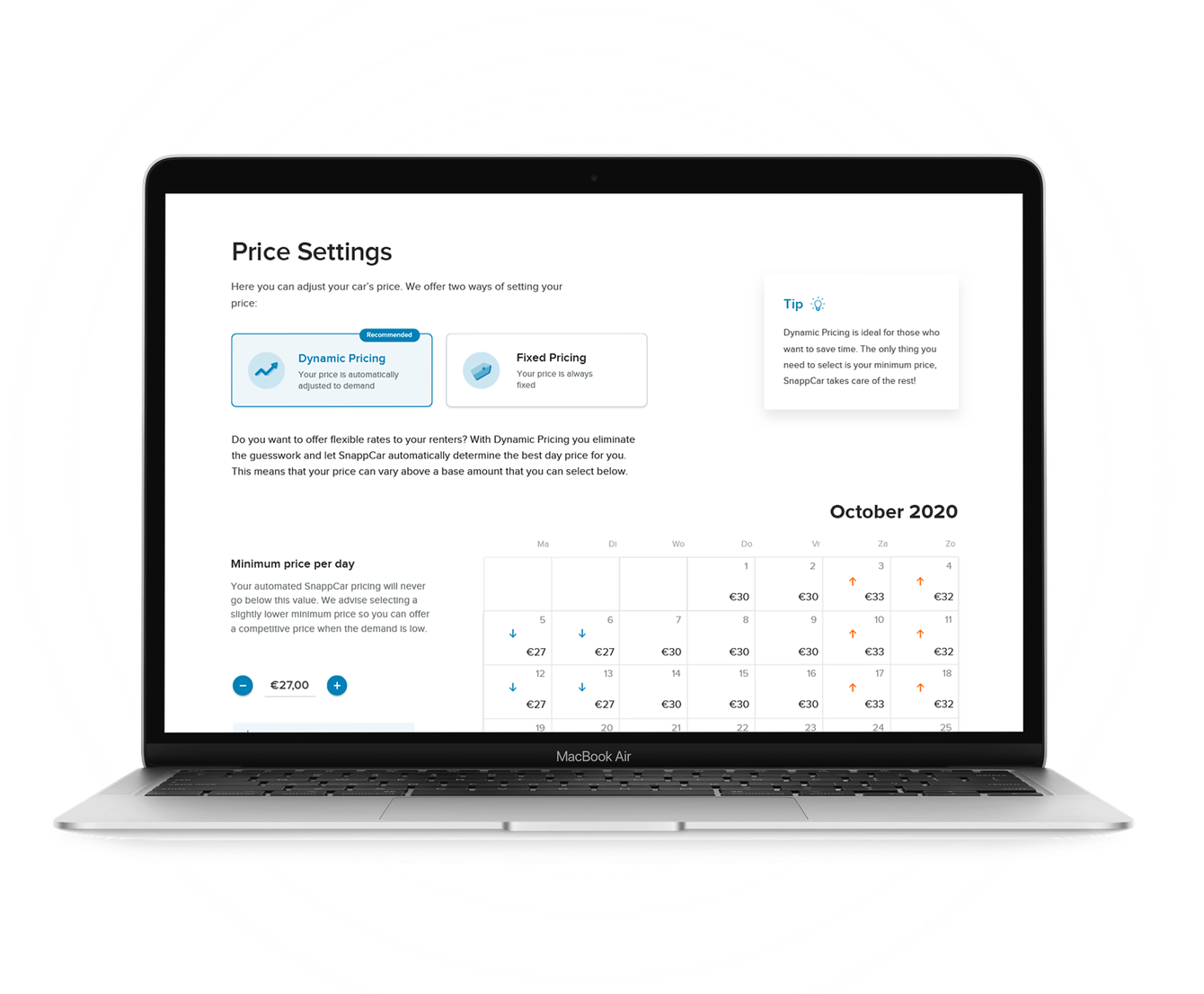
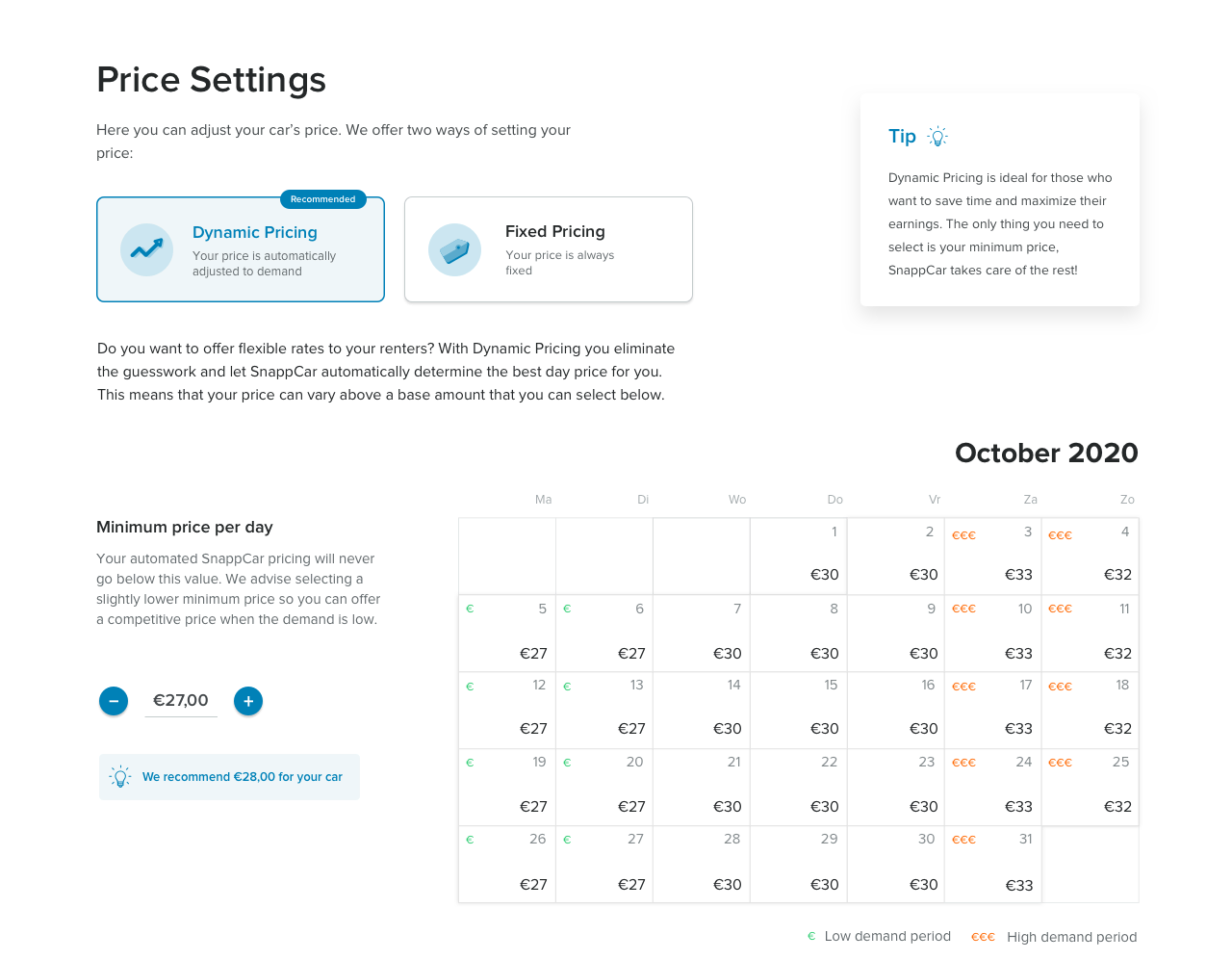
In the design, I decided to highlight — both in the text and the visuals — the idea that with Dynamic Pricing you're able to offer flexible rates to your renters and rent out your car more often. I also added visual explainers in the calendar to help car owners understand at least one variable of the algorithm: the high and low demand throughout the week.
Prototype & testing
I made a prototype of the desktop solution to use for user testing. This project took place in 2020 during the pandemic, so I decided to conduct the tests remotely and to use an unmoderated format so I could gather more quantitative data. The sessions consisted of a mix of 5 questions and 2 tasks displayed on the participants' desktop screen.
During the testing sessions, the majority of participants rated financial earnings as their main reason for renting out, and they were very positive about a feature that would let them charge prices according to demand.
They liked having the option to choose from a fixed or a dynamic price, and all of them interacted for a while with the "+" and "−" buttons to see how that changed the prices in the calendar. Car owners liked the fact that they were able to set a minimum price and have some control over the price outcome.
Regarding improvements, some users mentioned that the screen had too much text, and that some of that information could be hidden behind UI elements. Another point of feedback was that owners still lacked information about how the suggested price was being calculated. One user also suggested adding a maximum price control in addition to the minimum price one.
Final designs
Conclusion
The testing sessions showed that there is room for improvement in providing a more detailed explanation of how the price suggestion works, and in including more custom controls for car owners — such as a maximum day price, or the ability to override specific day prices.
Another topic that deserves attention in future iterations is how to convince skeptical car owners to select Dynamic Pricing. A solution could include a special campaign for the first 100 car owners who opt in, for example — providing some special perks, a financial bonus, or a try-out period in which SnappCar can compensate owners in case Dynamic Pricing doesn't turn out more profitable for them.